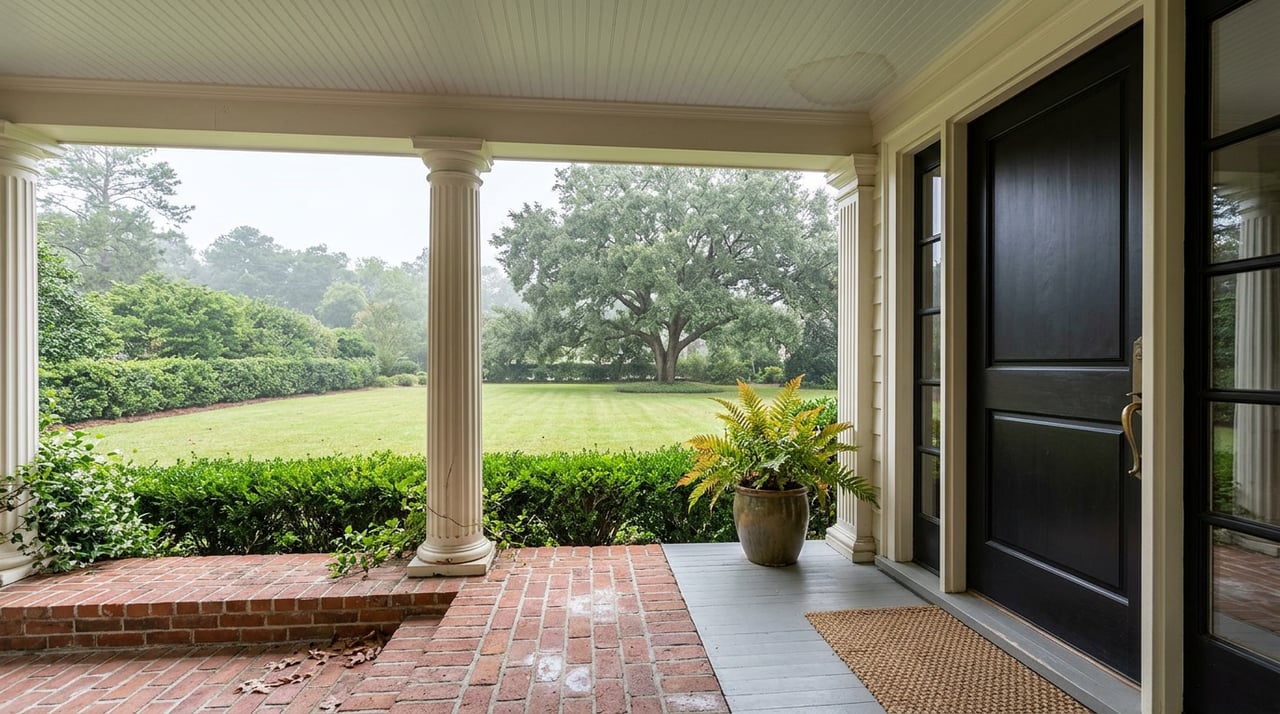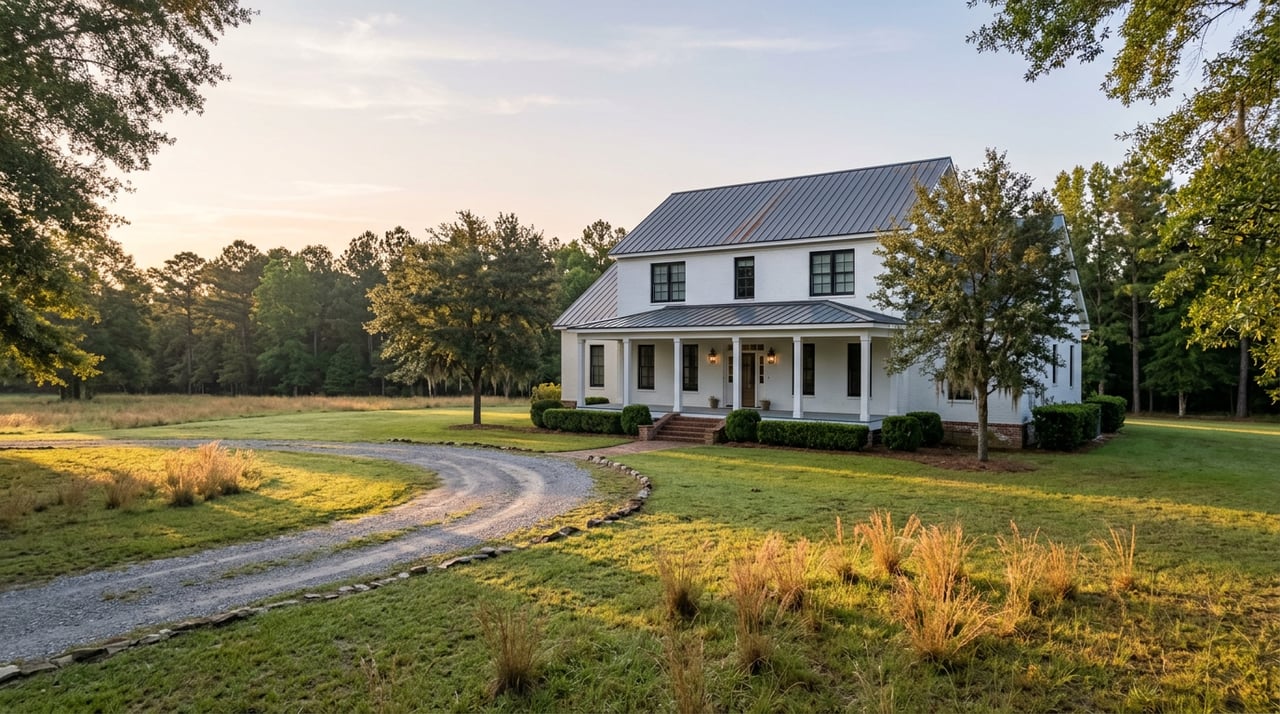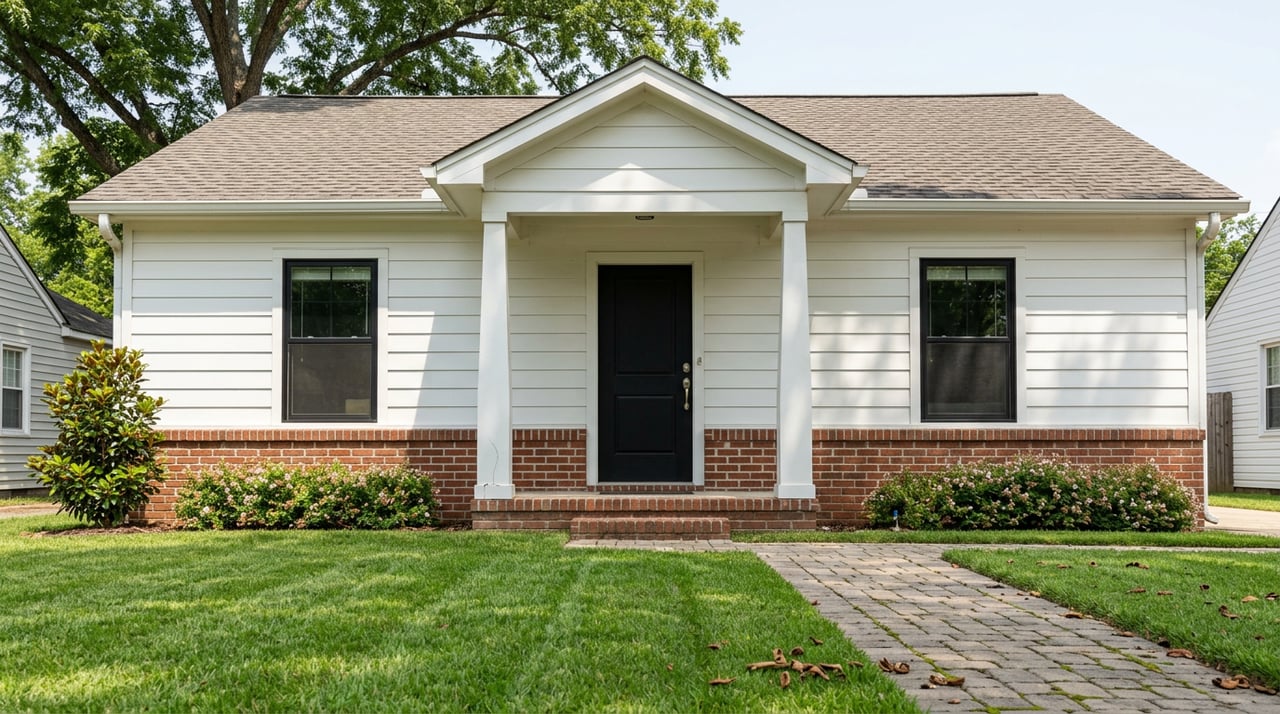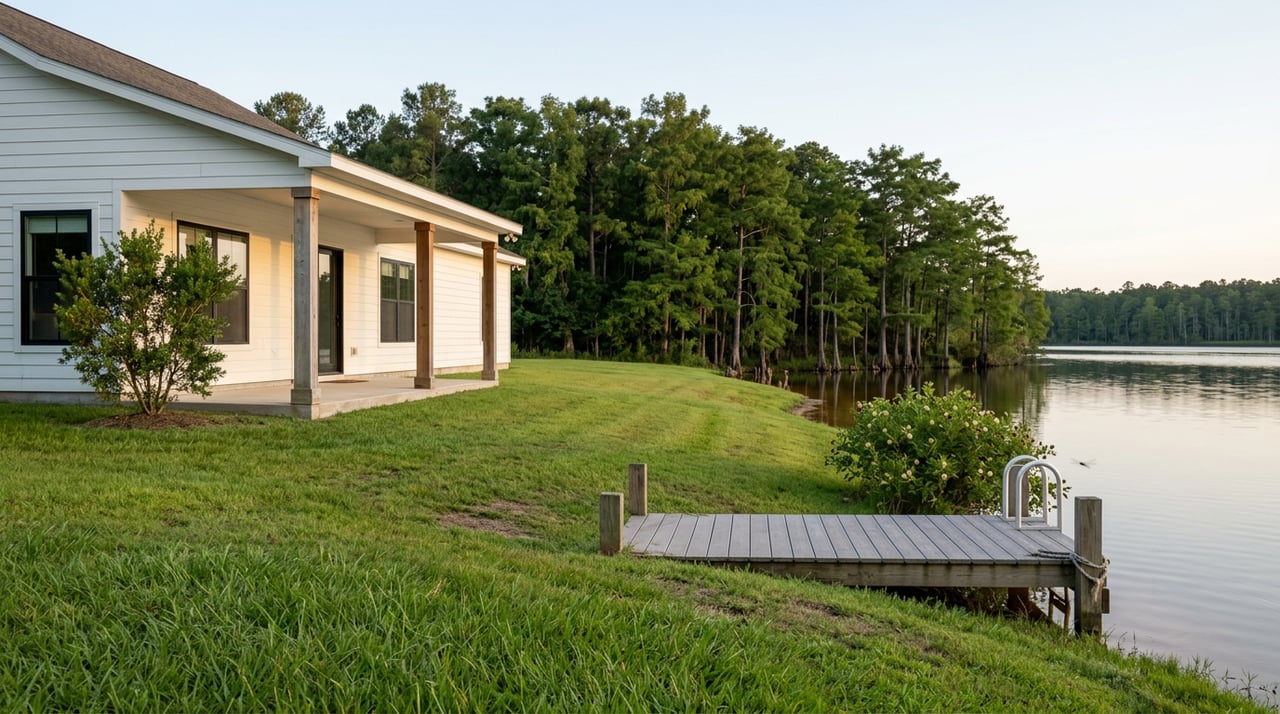
Ask what "Lake Seminole waterfront" gets you in Donalsonville, and the honest answer is: it depends which listing you're looking at. One property might have your yard ending at a federal buffer strip you don't own, with the actual shoreline a walk away through land the government controls. Another, a few miles down the same road, might run straight from the back porch to the water with a private dock already in place. Both get marketed with the same word. Neither listing usually explains the difference.
That gap matters more than most portal summaries let on, and it's the reason the numbers around Donalsonville's lake market look strange if you only skim the median. Waterfront-labeled homes in Seminole County have recently carried a lower median asking price than the town's overall housing market, and they've also moved faster. That's backward from what most buyers expect. Waterfront is supposed to cost more and take longer to sell, not less and faster. Understanding why requires knowing what the U.S. Army Corps of Engineers actually owns around this lake, and how that ownership quietly splits "waterfront" into two different products.
A Lake Built by the Army, Not by the Market
Lake Seminole isn't a natural body of water that developers built cottages around over a century. It's a reservoir the Army Corps of Engineers created behind the Jim Woodruff Dam, with construction starting in 1947 and substantially finished by 1957, backing up the confluence of the Chattahoochee, Flint, and Spring Creek to form 37,500 acres of open water and roughly 376 miles of shoreline. The Corps' own planning documents describe the reservoir's operating pool as sitting at a "relatively constant operating pool elevation of 77.5 feet above mean sea level," with only minor fluctuation tied to hydropower generation and no flood-storage drawdown built into the project.
That last detail is worth sitting with for a second, because it means Lake Seminole doesn't behave like some Georgia reservoirs that get pulled down several feet every winter to create flood capacity. The shoreline you see in July is close to the shoreline you'll see in January. That stability is genuinely good news for anyone weighing a lake purchase. But stability of water level has nothing to do with who owns the land between a house and that water, and that's where the real variation lives.
Because the Corps built and manages the project, it holds fee title to a meaningful share of the shoreline around the lake, not just the water itself. When a private lot borders the reservoir, the boundary between what the owner holds and what the federal government holds isn't always visible from the yard, and it isn't always where a buyer assumes it is. Some parcels run straight to the water. Others stop short, with a strip of Corps-managed land in between, governed by the Corps' shoreline management rules rather than by the deed.
Two Listings, Same Word, Different Products
You can see this split play out in the current inventory around Donalsonville. Sellers who know their lot runs clean to the water tend to say so explicitly, because it's a real selling point: listings describe "no Army Corps of Engineer land until you hit the water," or spell out an exact number of feet of confirmed frontage, precisely because that confirmation is not something every lake property can offer. A recent 0.58-acre listing advertised 100 feet of frontage with no Corps land intervening. A larger recreational tract on the lake was marketed around more than 600 feet of direct frontage as its headline feature. Sellers don't emphasize that kind of detail unless buyers have learned to ask for it.
Compare that to the other end of the spectrum: a 2.86-acre unbuilt parcel on Lake Kay Drive recently listed at $29,000, described in terms of lake proximity and buildability rather than confirmed private frontage. Both properties will surface under a "Lake Seminole waterfront" search. Only one of them tells you, in the listing itself, exactly where your ownership stops.
| Lot near a Corps buffer | Lot with confirmed frontage | |
|---|---|---|
| Where the deed ends | At a boundary set by survey, with federally managed land beyond it | At the water's edge, with frontage stated in feet |
| Dock access | Requires a Corps permit tied to the parcel, and permits aren't automatically transferable at sale | An existing dock may transfer, but the permit still needs verification before closing |
| What a walk to the water looks like | Across land you don't own, sometimes wooded and unmaintained | A direct walk from a private yard |
| Recent price signal | Acreage without confirmed frontage has listed in the high five figures | Confirmed frontage lots and homes command a clear premium over comparable acreage inland |
| How it tends to move | Can sit while a buyer weighs the uncertainty | Tends to draw a faster, more decisive offer |
What the Median Actually Hides
This is where the town-wide numbers start to make sense. Seminole County's waterfront-labeled homes have recently carried a median list price around $145,000, while Donalsonville's overall median home price this year has run higher, in the $175,000 to $178,000 range depending on the snapshot, up somewhere between 17 and 20 percent year over year. On paper, that means the water-adjacent product is pricing below the town as a whole, which is the opposite of what waterfront typically does to a market.
The likely explanation isn't that lake living is undervalued here. It's that "waterfront" as a search filter is catching a mix of products that shouldn't be averaged together in the first place. A handful of confirmed, deed-to-water homes with docks pull the top of that range up. A larger number of older lake cottages, land-only parcels, and lots separated from the shoreline by Corps land pull the median back down. Blend them into one number and you get a median that undersells what true frontage costs and oversells what a "near the lake" bargain actually includes.
The pace of sales tells a similar story. Current listings show Seminole County's waterfront homes moving in a median of around 83 days, while Donalsonville's broader market this year has run closer to 162 to 176 days to sell, more than double or triple the roughly 56 to 58 day national pace. A lot of that townwide drag comes from inventory that has nothing to do with the lake at all: fixer-uppers, investor specials, and manufactured homes that sit for months regardless of location. The lake product, once a buyer has confirmed what they're actually getting, tends to close with less hesitation. It's a smaller, better-defined market moving at its own rhythm inside a slower one.
What to Confirm Before You Write an Offer
If you're picturing weekend mornings launching a boat from your own dock, it's worth comparing that mental picture to what's actually a short drive away, whether that's a public launch like the Sealy Point boat ramp, the landing near Big Jim's, or a slip near Wingate's Marina. None of that is a knock against inland or buffer-adjacent lots. Plenty of people are perfectly happy with a five-minute drive to a public ramp instead of a private one. The problem only shows up when a buyer assumes they're getting private frontage and later finds out they're not.
Before you write an offer on anything described as Lake Seminole waterfront, it's worth asking:
- Does the current survey show the property line running to the water, or does it stop at a Corps boundary?
- If there's a dock, is the Corps permit tied to the property, and has the seller confirmed it will transfer at closing?
- How many feet of actual frontage does the deed describe, not just the listing photo?
- If the lot sits in an established area like Parkside Acres or another platted lake subdivision, has the community already resolved frontage questions for the block, or does each lot need its own check?
None of this is a reason to avoid the lake. It's a reason to ask specific questions instead of trusting the word "waterfront" to do all the explaining.
A Few Questions Worth Asking First
Does every home near Lake Seminole have a Corps boundary to worry about? No. Plenty of homes sit well back from the shoreline with no boundary question at all, and some established shoreline lots have long-confirmed private frontage. The issue only applies to properties actually bordering the reservoir, and even among those, the situation varies parcel by parcel.
How do I find out where the Corps line falls on a specific lot? Start with a current survey and compare it against the parcel's history with the Corps' Mobile District, which manages Lake Seminole's shoreline. A listing that already states "no Corps land to the water" is telling you the seller has already done this homework, which is worth something on its own.
Will the water level change much after I move in? Less than you might expect for a reservoir this size. The Corps maintains Lake Seminole at a fairly constant pool elevation year-round, with only minor fluctuation tied to power generation, rather than the seasonal drawdowns some other lakes use for flood storage.
If you're weighing a move to the lake, or trying to figure out whether a specific Donalsonville listing is the real thing or the near-thing, First & Main Real Estate Group can walk the property line with you before you write an offer, not after. Start Your Property Search whenever you're ready to look at what's actually on the market, frontage and all.